Identify the equipment and bearing position
Provide equipment type, make/reference, assembly position and existing bearing markings. For motor projects, include the drive architecture and bearing position of concern.

Technical support
The objective is not to fill pages with unverified values. It is to convert equipment, duty and procurement requirements into selection inputs that can be checked.
People and industrial backgrounds are application illustrations; product photography and specifications are identified separately.Selection workflow
A model number is only a starting point. Complete duty data reduces clarification cycles and avoids treating a standard base model as a substitute for a special design.
Provide equipment type, make/reference, assembly position and existing bearing markings. For motor projects, include the drive architecture and bearing position of concern.
Provide shaft d, housing or outside D, width B, fits and adjacent-component constraints. Upload a drawing when available.
Load, speed, temperature profile, medium, lubrication, start-stop cycle and maintenance interval all influence selection.
State quantity, target delivery, prototype or production phase, and any inspection or packaging requirement.
Engineering reviews the inputs, confirms the model and arrangement, and flags any remaining validation before quotation.
Information checklist
For missing dimensions or unpublished performance values, engineering will request the specific gap rather than infer it from another brand’s data.
Transcribe every marking. Spaces, slashes and suffixes can represent arrangements or special designs.
These denote bore, outside diameter and width. If measurement is impractical, provide a drawing or a scaled photograph.
The catalog records face-to-face, back-to-back or tandem markings as supplied; final mounting and preload still require confirmation.
Provide continuous range, peaks, cycling rate and every gas, liquid or cleaning agent in contact.
State radial/axial load, steady or shock conditions, normal speed and maximum speed.
Describe lubrication method, replenishment interval, sealing and acceptable maintenance windows.
Verification and quality contexts
The scenes explain why dimensions, materials, coatings and cryogenic checks require a defined sample and condition. They are not evidence of specific GSNK equipment or certification.
 Packing review
Model, quantity, packaging and destination should remain traceable from quotation through shipment.
Send procurement inputs Global logistics
Target delivery, batch stage, export packing and documentation should be stated with the technical request.
Discuss delivery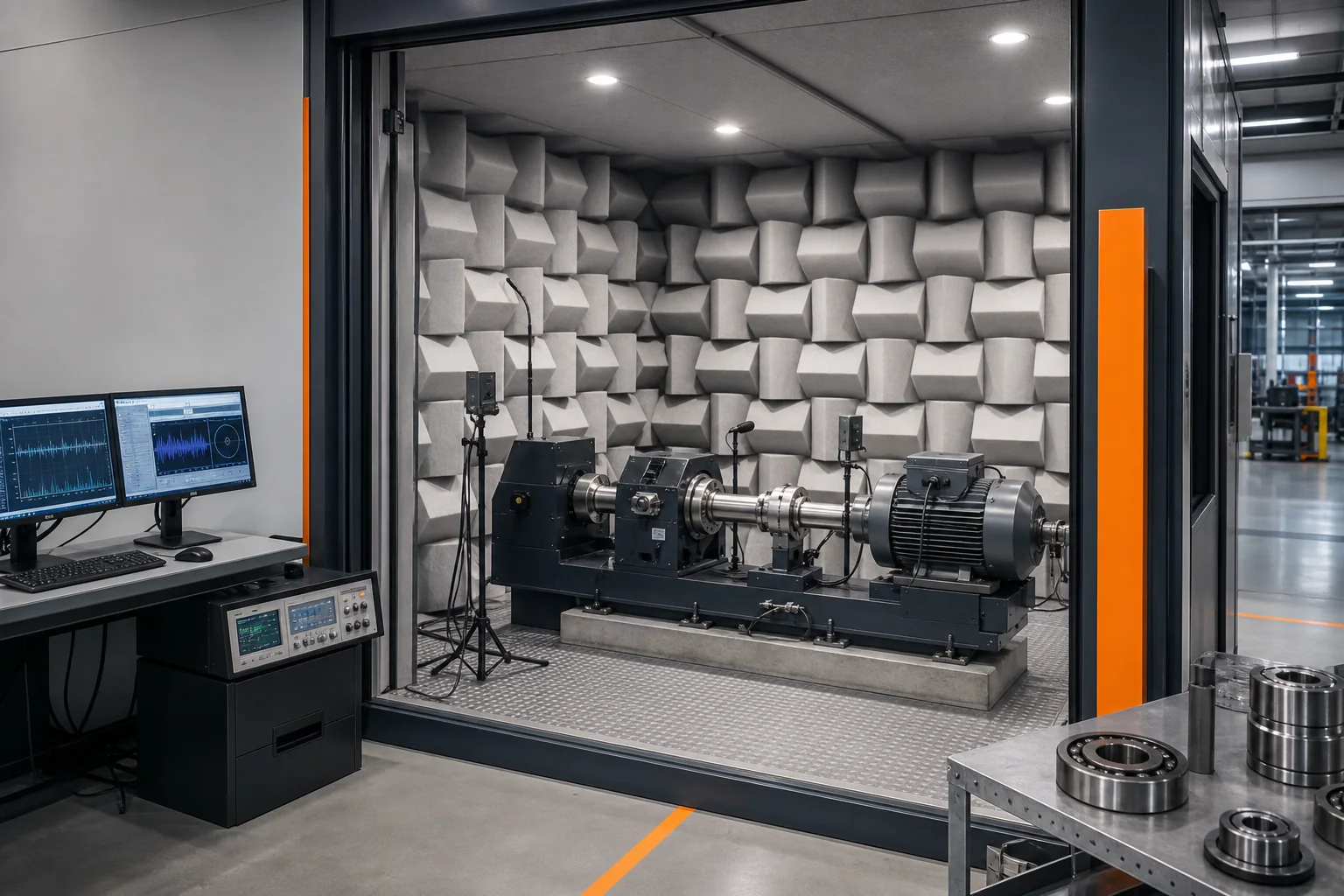 Noise and vibration
A test value is meaningful only when model, speed, load, lubrication and measurement setup are specified.
Define test conditions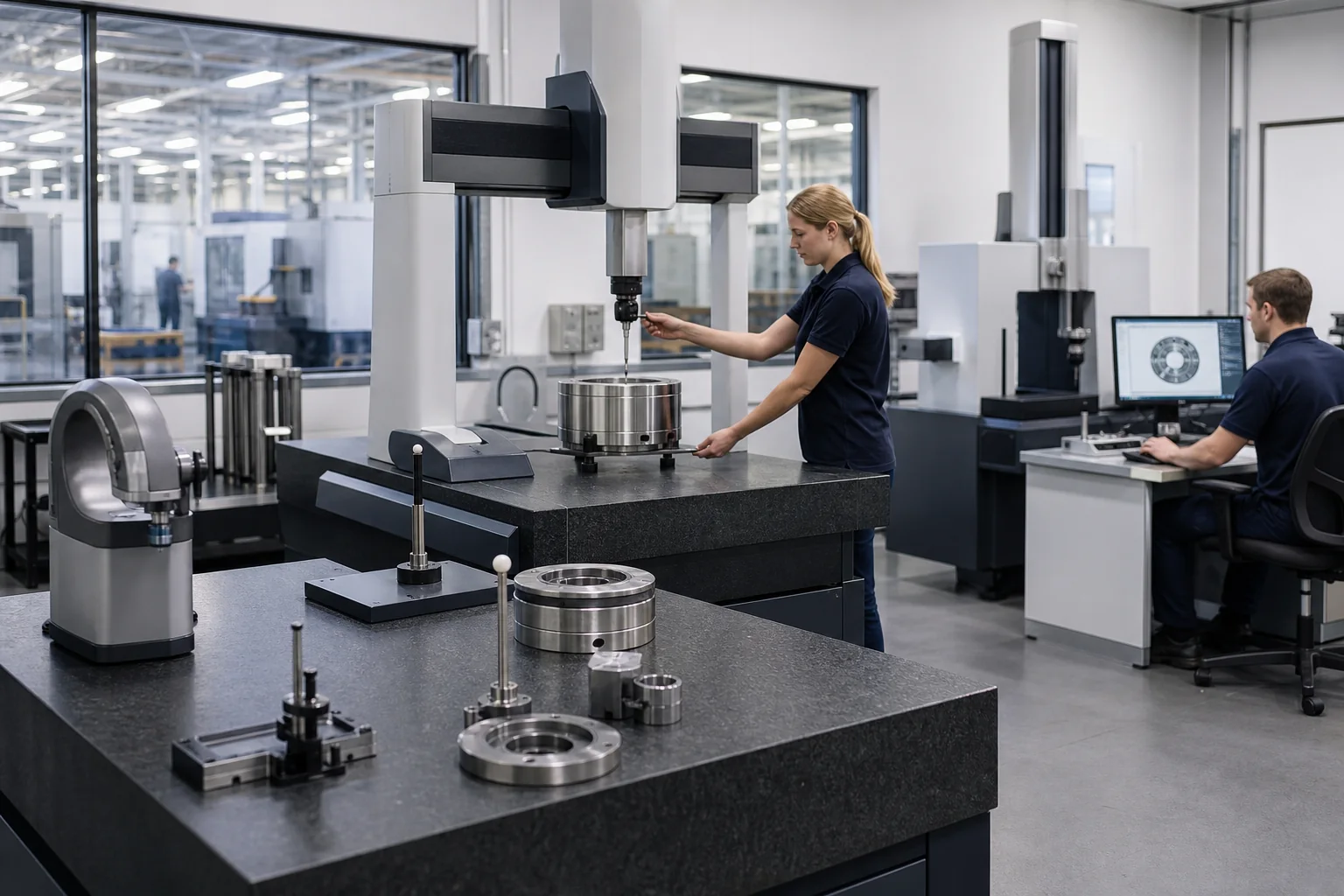 Metrology
Base d/D/B helps identify a designation; tolerances and geometric limits must come from project documentation.
Upload a drawing Material review
Material and heat-treatment claims remain tied to a defined product and verifiable document.
Send material requirements Thermal inspection
Continuous range, peaks, cycling and adjacent heat sources all belong in the selection input.
Describe the dutyFrequently asked questions
Standard d/D/B can match while clearance, cage, seals, materials, contact angle and special suffixes change internal design and performance.
Upload clear marking photographs, critical dimensions and equipment or assembly information. Engineering can identify the product before selection.
No. The site uses standard base-designation pages only to cross-check d/D/B and does not treat another brand’s loads, speeds or suffix performance as GSNK data.
No. Files are used to process the inquiry, stored privately and accessed by administrators through time-limited secure links.
Start a selection
After submission, the inquiry reference is emailed for sales and engineering follow-up.